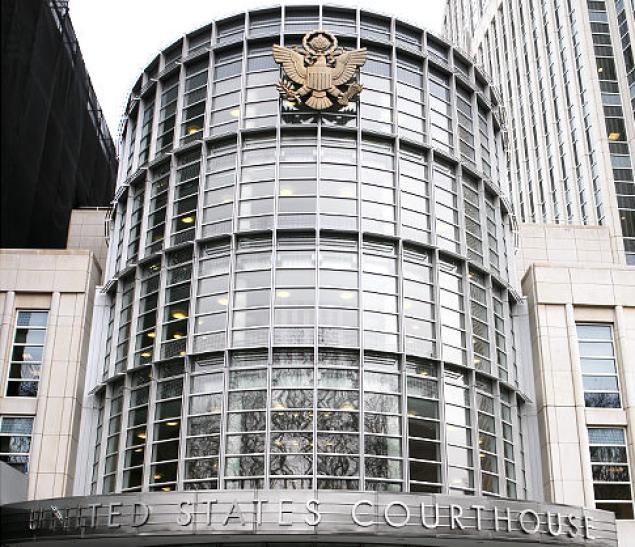
Federal criminal defense practitioners will be interested in United States v. Barry Cohan, an EDNY decision addressing the priority of overlapping forfeiture and restitution remedies in a health care plea agreement.

In Cohan, the defendant pled guilty to health care fraud and identity theft, and was subject to a $600,000 forfeiture and $607,186

In Matter of Koch v. Sheehan, the New York Court of Appeals held that the Office of Medicaid Inspector General (“OMIG”) may remove a physician from the Medicaid program based solely on a consent order between the physician and the Bureau of Professional Medical Conduct (“BPMC”), even if BPMC does not suspend the physician’s

          In March 2013, the Second Circuit certified to the New York Court of Appeals the issue of whether a medical corporation may be liable for the unauthorized disclosure of medical information, when the employee responsible for the breach was not a physician and was acting outside the scope of her employment (see post). 

Earlier this week, in Roman Catholic Archdiocese of New York v. Sebelius, U.S. District Judge Brian Cogan in the Eastern District of New York permanently enjoined the government from enforcing regulations mandating coverage for contraceptive and sterilization services by religious organization health plans.

The Patient Protection and Affordable Care Act requires health insurance plans

In U.S. ex rel. Fair Laboratory Practices Associates v. Quest Diagnostic, Inc., the Second Circuit upheld the dismissal of a health care fraud qui tam action because of ethical violations by one of the relators, who was formerly general counsel of defendant Unilab Corporation.

The former general counsel, along with two other former employees

In U.S. ex rel. Wolfson v. Park Avenue Medical Associates, the U.S. Attorney’s Office in the Southern District of New York entered into a $1 million False Claims Act settlement against three related companies for improperly billing Medicare for behavioral health services.  The settlement agreement provided that the defendants “admit, acknowledge and accept responsibility

Over fifty cases across the country have challenged regulations promulgated under the Patient Protection and Affordable Care Act (“PPACA” or “Obamacare”) that require employer group health insurance plans to provide coverage for contraception, sterilization and related counseling (the “HHS Mandate”).  Suits have been filed by religiously-affiliated organizations as well as private business owners, asserting that

In  last week’s decision in Doe v. Guthrie Clinic, Ltd. the Second Circuit Court of Appeals certified to the New York Court of Appeals the issue of whether a medical corporation may be liable for the unauthorized disclosure of medical information, when the employee responsible for the breach was not a physician and was

Peter A. Mahler, author of our sister blog New York Business Divorce, posted an excellent analysis of a recent case involving a shareholder dispute among members of an anesthesia group.

Key pieces of advice from Mahler:

  • Draft clear termination and exit provisions in shareholder and employment agreements;
  • Arbitration clauses can produce quicker results

Several health care industry companies, including Medicis, ArthroCare and Amedisys, reported in their 2012 first quarter reports that they were under Department of Justice investigations and had received civil investigative demands from the government.

Civil investigative demands, referred to as CIDs, are a particularly powerful pre-lawsuit administrative tool for federal investigations.  Using CIDs, the government